Last week, the weather on the other side of the world became one of the biggest stories in cacao. On 11 November, Reuters reported that Ivory Coast's national weather agency has warned an exceptionally strong El Niño could cut the country's cocoa harvest by up to a quarter [1]. Ivory Coast is the world's largest cocoa producer, so a forecast like this ripples out to every chocolate aisle.
So what is El Niño, why does it matter so much to cacao, and what could it mean for the farms that grow it? Here is a clear, calm look at the story.
What is El Niño?
El Niño is a natural climate pattern in which the surface of the tropical Pacific Ocean warms well above normal. That warmth shifts winds and rainfall around the world, bringing heavier rain to some regions and drought to others.
This year's event is unusually strong. In its October update, the US National Oceanic and Atmospheric Administration (NOAA) reported that El Niño was still strengthening, with sea surface temperatures more than 4°C above average in parts of the eastern equatorial Pacific. It gave a greater than 83% chance of a strong to very strong El Niño lasting through January to March 2027, and a high chance of an event stronger than any recorded since 1950 [2].
ABC News reported on 11 November that forecasters from the World Meteorological Organization expect the event to persist until at least February 2027, raising the risk of extreme heat, droughts and flooding worldwide [3]. The effects are already being felt beyond cacao: in India, a weakened monsoon has dried out sugarcane crops and pushed up sugar prices [3].
Why cacao is so sensitive to weather
Cacao trees are tropical plants that thrive on warmth, humidity and reliable rain. When the rain fails and the heat climbs, the trees feel it quickly. Ivory Coast's weather agency, SODEXAM, described exactly what happens in its note on the "Super El Niño 2026–2027": "The water deficit combined with high temperatures causes wilting and premature drop of young pods, flower abortion and tree defoliation" [1].
The agency warned that annual rainfall could fall by 10% to 27%, with a shorter rainy season and a longer dry season, and that the event would be "structurally severe" [1]. It estimated that Ivory Coast's 2026/27 cocoa production could drop by 21% to 25% [1]. For context, the country harvested more than 2 million tonnes last season, according to exporters [1].
Behind those numbers are farming families. Reuters spoke with Simplice Koua, who farms six hectares in Duékoué. By this time last year he had sold 14 bags of cocoa. This year, he has sold three. "We are in November, but production hasn't moved," he said [1].
What the markets are doing
Markets have been weighing two things at once. On one side is the risk to future harvests. On the other are cocoa stocks in exchange warehouses, which have been building for months. A broker quoted by Reuters on 11 November said that build-up "suggests that supply is outstripping demand", while noting that El Niño remains a risk and that soil in West Africa was expected to dry over the following week to ten days [4].
After touching four-month lows on 10 November, cocoa futures bounced the next day, with London cocoa up 2.9% and New York cocoa up 3.2% [4]. If you would like the bigger picture on prices, our recent post Cocoa's Wild Ride: What's Happening to Chocolate Prices in 2026 walks through the last two years.
El Niño and the Amazon
El Niño reaches South America too, but its effects depend on where you stand. Peru, where our cacao grows, has its own national El Niño committee, ENFEN. In its latest statement, released on 30 October, ENFEN kept its coastal El Niño alert in place and said the event was expected to stay at an extraordinary magnitude until February 2027, then ease gradually through to June [5].
For Peru's Amazon, ENFEN expects rainfall from November to January to be normal to below normal. It expects river flows in the northern jungle to stay normal, while rivers in the central and southern Amazon run lower than usual [5].
Researchers have shown that El Niño is the main driver of year-to-year climate extremes across the Amazon, but that no two events play out the same way. During the strong El Niño of 2015–16, the eastern Amazon suffered extreme drought while parts of the western Amazon were unusually wet, a pattern the authors linked to where the Pacific warming peaked [6]. That is why forecasts like ENFEN's matter so much to the people who farm there.
What this means for ceremonial cacao
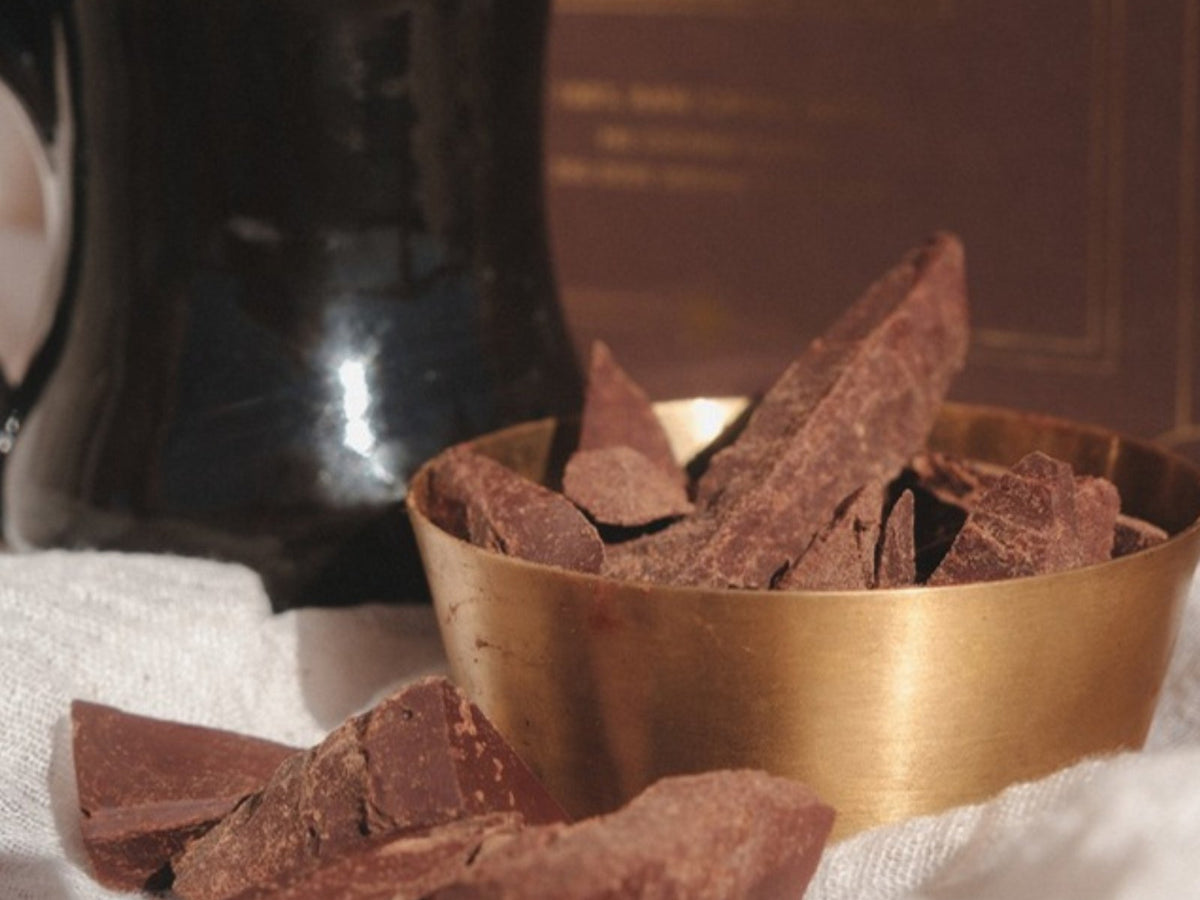
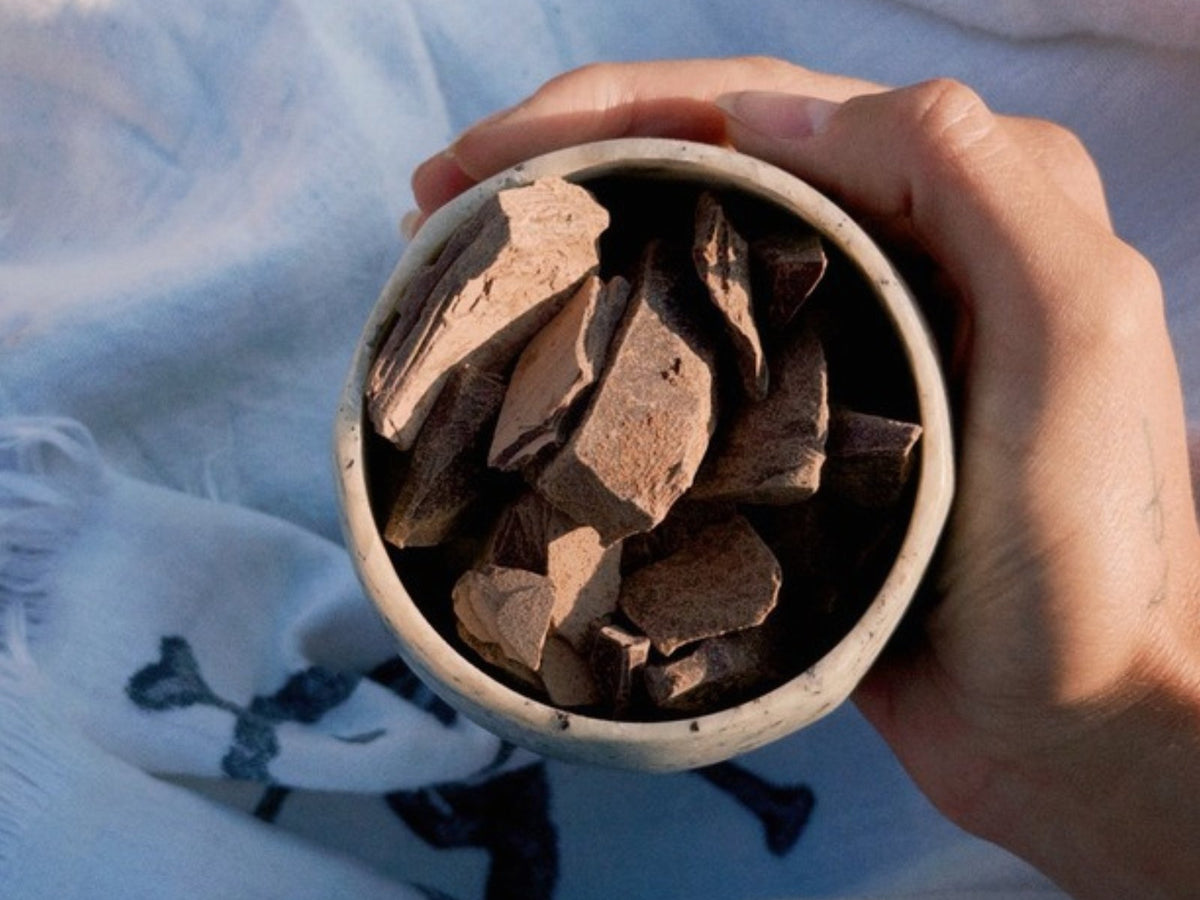
Our cacao comes from a very different world to the bulk cocoa traded on exchanges. It is Criollo, the world's original cacao bean strain, traced back 2,000 years, and it grows wild in the Amazonian region of Tarapoto, San Martín, in the north of Peru's Amazon. There, it is hand-picked, fermented, sun-roasted, air-dried and cold-pressed into pure paste, then lab tested in Australia.
No cacao-growing region sits outside the climate, and stories like this one are a reminder of how closely every cup is tied to the land, the rain and the people who tend the trees. You can read more about the place our cacao calls home in Cacao's Rich History in the Amazonian Region of Tarapoto.
Perhaps the most beautiful thing we can do is hold that connection with gratitude. When you whisk your next cup, take a moment to think of the trees, the sun and the hands that brought it to you.
Explore our ceremonial cacao, or choose the 1kg bag for fifty 20g cups, with free shipping on orders over $120 across Australia.
References
- Aboa A. Ivory Coast cocoa production could fall 25% from El Nino, weather agency says. Reuters, 11 November 2026. Published by CNBC Africa. cnbcafrica.com
- NOAA Climate Prediction Center. El Niño/Southern Oscillation (ENSO) Diagnostic Discussion, 8 October 2026. cpc.ncep.noaa.gov
- Clayton R, Burhan B. Retail sugar prices rising after super El Niño dries out India's sugarcane crop. ABC News, 11 November 2026. abc.net.au
- Reuters. Arabica coffee hits six-week low, cocoa and sugar rebound. Published by Business Recorder, 12 November 2026. brecorder.com
- Comisión Multisectorial ENFEN (Peru). Comunicado Oficial ENFEN N° 19-2026, 30 October 2026 (in Spanish). enfen.imarpe.gob.pe
- Jiménez-Muñoz JC, Mattar C, Barichivich J, Santamaría-Artigas A, Takahashi K, Malhi Y, Sobrino JA, van der Schrier G. Record-breaking warming and extreme drought in the Amazon rainforest during the course of El Niño 2015–2016. Scientific Reports. 2016;6:33130. doi:10.1038/srep33130
A note from us: Our journal is shared for general education and inspiration. It is not medical advice, and nothing here is intended to diagnose, treat, cure or prevent any health condition. Research we mention is reported as research, not as a claim about our products. Everyone's body is different, so please speak with your doctor or a qualified health professional before changing your diet, especially if you are pregnant, breastfeeding, taking medication or managing a health condition.